

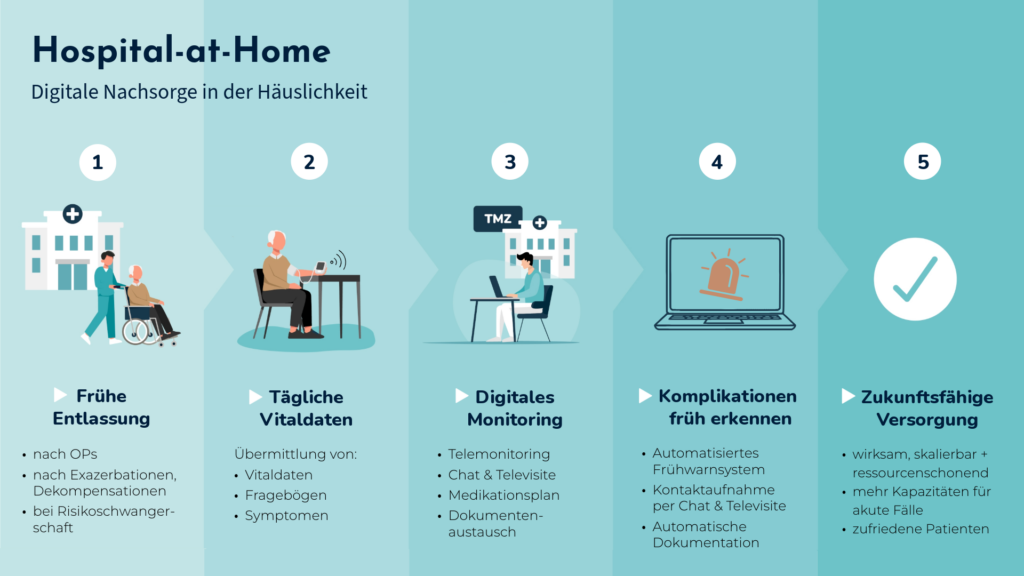
The Institute for Applied Telemedicine (University Hospital of the Ruhr University Bochum) has been relying on SaniQ OS for the digital care of heart failure patients since 2024.
To the press release of the Heart Diabetes Centre NRW: https://www.hdz-nrw.de
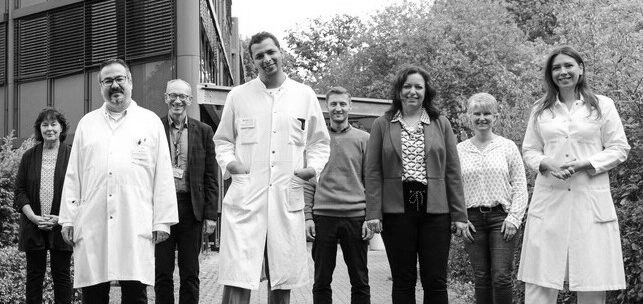
IFAT has been providing telemedical services to around 11,000 patients for over 20 years. Following a detailed tendering process for the digital care of heart failure patients, SaniQ was chosen. The IFAT acts as a telemedicine centre and coordinates an extensive network of experienced cardiologists. As a technology partner, Qurasoft contributes the software infrastructure with the SaniQ platform and ensures its continuous further development.
The SaniQ platform was tailored to specific requirements in order to optimise cross-sector care through IFAT:
- Telemonitoring blood pressure, weight and ECG for continuous patient monitoring
- API connection to the hospital information system for automated and bidirectional transmission of patient-related data
- Workflow Manager for structured collaboration between healthcare professionals (internal & intersectoral)
- Patient app to actively involve patients in the care programme
- regular Televisits coaches of the IFAT with the connected patients
The LungenClinic Grosshansdorf (et al.) is investigating the benefits of home telemonitoring for COPD using SaniQ in the Telementor COPD study. Initial results are expected in 2025.
ZDF reported on the study in an article on 19 November 2025.
> To the report in the ZDF media centre

Content: The Telementor COPD study is a multicentre, randomised and controlled clinical trial funded by the G-BA Innovation Fund under Consortium management of the LungenClinic Großhansdorf. The aim of the study is to prevent exacerbations in COPD patients through digital prevention and home monitoring.
Partner: LungenClinic Großhansdorf, University Medical Centre Schleswig-Holstein, University Medical Centre Hamburg-Eppendorf, Astra Zeneca and many more.
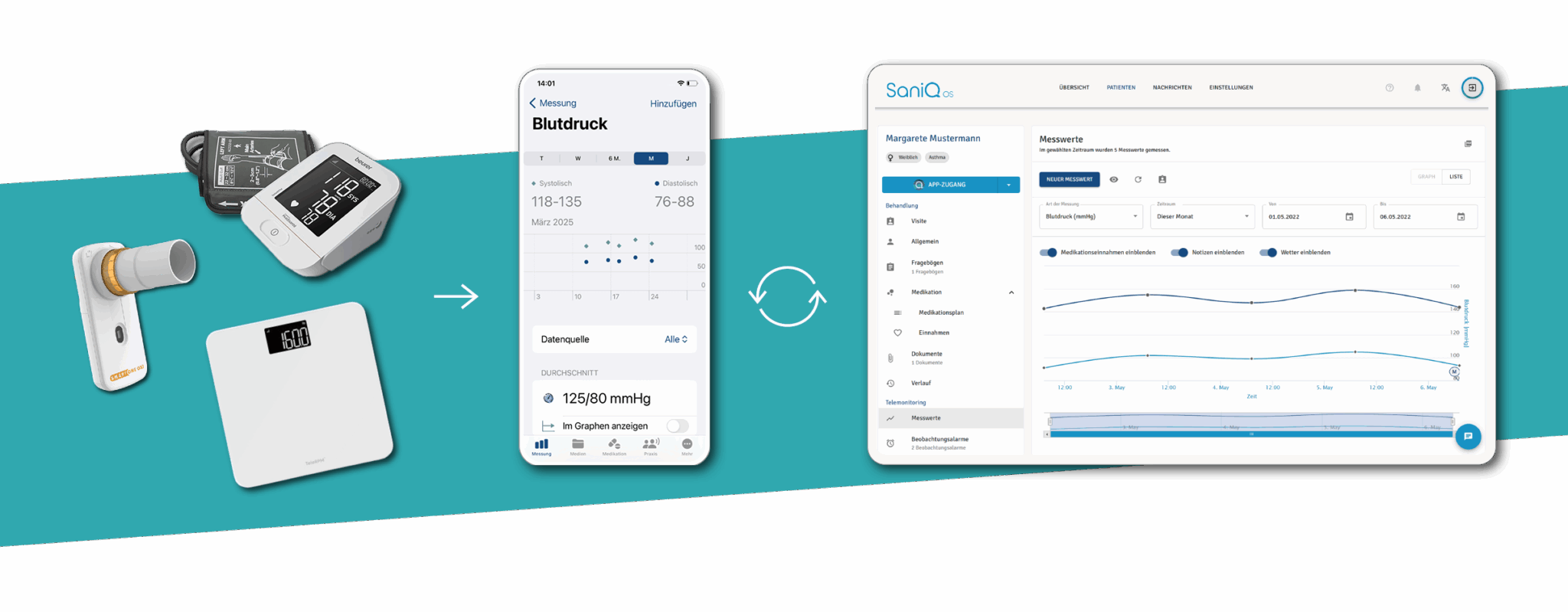
As part of the study, various vital signs of the patients are monitored using SaniQ OS and connected sensors (telespirometer, smartwatch) and analysed by the study staff:
- Telemonitoring lung function (FEV1), heart and respiratory rate, blood-oxygen saturation and daily step count for continuous patient monitoring
- API connection to the hospital information system for automated and bidirectional transmission of patient-related data
- Patient app to actively involve patients in the care programme and to generate patient-reported outcomes
- The study personnel regularly Televisits with the connected patients through



 Deutsch
 English
 English (UK)
 Français
 Italiano
 Español
 简体中文
 Nederlands
 Nederlands (België)
 Français de Belgique
 Polski
 Türkçe
 Українська